When it comes to machining titanium and other difficult materials, efficiency isn’t just about going faster, it’s about controlling heat, engagement, and predictability at every point in the cut.
In our recent webinar, Dynamic Motion–Driven HREM, Jesse Trinque from Mastercam sat down with Don Grandt, National Applications Engineer at Harvey Performance Company, to explore how Heavy Radial Efficiency Machining (HREM), when paired with Dynamic Motion toolpaths, can dramatically improve tool life, stability, and cycle time.
Here is a recap of the key takeaways.
Why heat is the real enemy in titanium
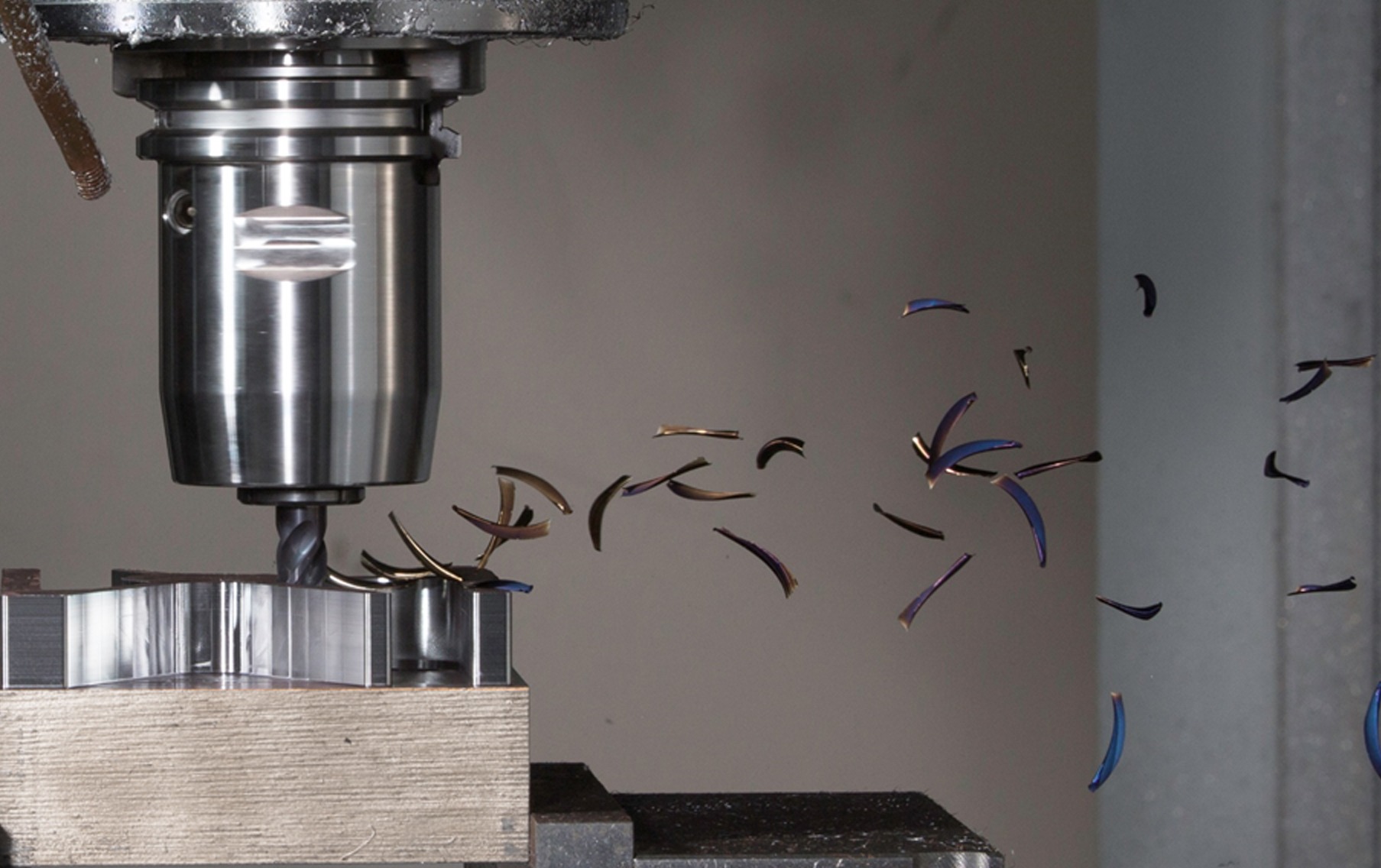
Titanium doesn’t fail machining processes slowly; it fails suddenly. As Don explained, excessive heat at the cutting edge leads to built‑up edge, where material welds to the tool, breaks away unpredictably, and rapidly accelerates tool failure. Ironically, many shops respond to early warning signs by slowing down, which often makes the problem worse by increasing heat and work hardening.
The solution is not caution. It is control.
Effective machining processes share a few defining traits:
- Consistent chip thickness
- Predictable chip color and shape
- Stable sound at the spindle
- Even tool wear along the cutting edge
Achieving all of this at once requires good tooling and the right motion.
Why traditional toolpaths leave performance on the table
Conventional offset toolpaths force programmers to plan for the worst‑case scenario: full slotting, maximum engagement, and conservative feeds and speeds everywhere else.
The result?
- Lost cycle time in open areas
- Excess heat in tight corners
- Uneven tool wear and premature failure
Even common high‑efficiency strategies that rely on very light radial engagement (5–6%) and high surface speeds can create hidden problems in titanium, especially as spindle speeds climb and chips stop evacuating cleanly. This is where Dynamic Motion changes the equation.
Dynamic Motion: Consistency across every inch of the cut
Mastercam’s Dynamic Motion toolpaths continuously manage engagement so the tool experiences the same chip thickness in straight lines, tight corners, and complex geometries alike.
That consistency unlocks new possibilities:
- Smoother lead‑ins and lead‑outs
- Predictable cutting forces
- Confidence to push tools harder without crossing the failure threshold
Introducing HREM: Heavy Radial Efficiency Machining
HREM (Heavy Radial Efficiency Machining) flips the traditional high‑efficiency model on its head.
Instead of maximizing surface speed and minimizing radial engagement, HREM focuses on:
- Reducing surface speed to control heat
- Increasing radial engagement (often 15–25%)
- Using Dynamic Motion to maintain constant chip thickness
The goal is not aggression for its own sake. It is balance by putting heat into the chip, not the tool, while stabilizing the cutter with more consistent engagement. As Don put it: “Go slower to go faster.”
The results: Real data, real gains
To validate the approach, Jesse and Don ran controlled tests in titanium at Harvey Performance’s Innovation Lab in Maine.
Baseline strategy (traditional HEM)
- ~6% radial engagement
- Higher surface speed
- Cycle time: ~16 minutes
- Early signs of built‑up edge and floor burnishing
HREM strategy (Dynamic Motion + heavy radial)
- ~25% radial engagement
- Reduced surface speed
- Cycle time: just over 14 minutes
- Cleaner floor finish
- Significantly reduced built‑up edge under magnification
Same material removal rate and amount of material removed. Less heat. Fewer passes. Better tool stability.
In real‑world applications, customers are reporting:
- 6–8 hours of tool life in titanium
- Fewer unplanned tool changes
- More predictable, “set‑and‑forget” machining processes
Where HREM shines and where it does not
HREM is not a universal switch you flip on every job.
It works best when:
- Machines are rigid and well‑powered
- Workholding is solid
- Chip evacuation is managed properly
- Materials generate heat‑sensitive failure modes (titanium, stainless, superalloys)
It may not be appropriate for:
- Flexible setups
- Horsepower‑limited machines
- Very small‑diameter tools where deflection dominates
The key is understanding the principle: lower surface speed, higher radial engagement, and applying it thoughtfully.
The bigger impact: Predictability wins
Beyond cycle time and tool life, the biggest benefit of HREM may be predictability.
When tools wear evenly and last longer:
- Tool changes become planned, not reactive
- Scrap risk drops
- Machines spend more time cutting and less time waiting
That’s how shops increase throughput; not by adding machines, but by unlocking more performance from the ones they already have.
Missed the Live Event?
You can still catch all the insights on your schedule. Register now to unlock on-demand access and start learning whenever it works best for you.
Keep learning with Mastercam
This webinar is just one example of how Mastercam and our partners are helping manufacturers rethink what is possible.
- Join us for our upcoming webinars.
- Explore our full events calendar to stay connected with training, product updates, and live technical discussions designed to help you overcome your next machining challenge.