Bringing Digital Tools Closer to Reality
In modern manufacturing, precision starts long before a machine tool makes its first cut. Accurate tool definitions are critical for creating reliable toolpaths, validating machining strategies, and avoiding costly surprises on the shop floor. As cutting tools continue to evolve, CAM software must keep pace with increasingly specialized geometries and applications.
That is why Mastercam 2027 introduces significant enhancements to tool definitions across both Mill and Lathe. From expanded shank profile support to more flexible reamer and center drill definitions, these updates help programmers create digital tool representations that more accurately match the tools they use every day.
Defining Tools with Greater Accuracy
A tool definition is more than just diameter and length. The geometry of a tool directly affects simulation accuracy, collision detection, and confidence in the generated toolpath.
Mastercam 2027 expands tool definition capabilities to better support modern tooling and specialized cutting applications. These enhancements are available throughout Mill and Lathe tool definitions, giving programmers more flexibility when modeling real-world tools.
New Shank Profile Support for Specialty Tools
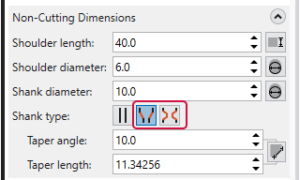
One of the most impactful additions in Mastercam 2027 is support for tapered and reduced-neck shank profiles across several commonly used tool types, including:
- Radius mills
- Chamfer mills
- Slot mills
- Dove mills
- Engraving mills
- Taps
Many manufacturers rely on these specialized tools to access difficult features, improve reach, or reduce interference during machining operations. Until now, accurately representing these geometries often required approximations or workarounds.
With Mastercam 2027, users can define these shank profiles directly, resulting in a tool model that more closely matches the physical tool being used.
Why it matters
A more accurate digital representation helps improve:
- Simulation fidelity
- Collision detection and avoidance
- Toolpath validation
- Overall programming confidence
For shops machining complex parts or working in tight spaces, these improvements can make a meaningful difference during process planning and verification.
Expanded Slot Mill and Dove Mill Definitions
Mastercam 2027 also introduces greater flexibility when defining slot mills and dove mills.
Users can now specify a shank diameter that is larger than the cutting diameter, making it easier to represent tools such as key cutters and similar specialty cutters. While the shoulder diameter remains limited to the cutting diameter, this enhancement better reflects how many of these tools are manufactured and used in real-world applications.
By eliminating the need to approximate tool geometry, programmers can spend less time creating custom solutions and more time focusing on machining strategy.
More Flexible Reamer Definitions
Hole-making operations often depend on highly specialized tooling, and reamers are no exception.
Mastercam 2027 expands reamer capabilities with support for:
- User-defined chamfer angles at the tool tip
- Taper angles applied across the entire cutting portion of the tool
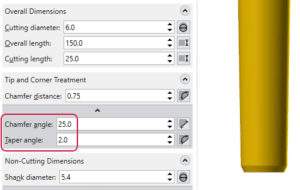
These additions make it easier to model a wider variety of standard and custom reamers used in precision manufacturing environments.
The result is a more accurate representation of the cutting tool, leading to improved simulation and more reliable process verification before a program ever reaches the machine.
Expanded Center Drill Support
Center drills are a staple in many machining operations, and Mastercam 2027 broadens support beyond the traditional Type A design.
In addition to Type A center drills, users can now define:
- Type B center drills with chamfer profiles
- Type R center drills with radius profiles
This expanded support allows programmers to match a broader range of industry-standard tooling while maintaining consistency between the digital model and the tool in the spindle.
Improved Lathe 3D Tool Controls
Lathe users also benefit from greater flexibility in Mastercam 2027.
For Lathe 3D tools, users can now define default feed rates and cutting speeds that exceed 100 percent. This enhancement gives programmers more control when establishing tool defaults and better accommodates advanced machining applications where standard limits may not reflect real-world cutting conditions.
Fewer Workarounds, More Confidence
While each enhancement delivers value individually, together they represent a larger step forward in tool definition accuracy.
By supporting more tooling styles, more geometry options, and more realistic tool configurations, Mastercam 2027 helps programmers:
- Better represent modern and specialty cutting tools
- Improve simulation and verification accuracy
- Reduce reliance on custom tool approximations
- Increase confidence in collision checking
- Streamline programming workflows
Designed for Real-World Manufacturing
As tooling technology continues to advance, manufacturers need CAM software that can accurately represent what happens in the real world.
The tool definition enhancements in Mastercam 2027 provide the flexibility needed to support today’s evolving tooling landscape while helping users program with greater confidence and efficiency.
Whether you are machining with tapered tools, key cutters, specialized reamers, advanced center drills, or complex lathe tooling, Mastercam 2027 makes it easier than ever to create tool definitions that accurately reflect the tools you depend on every day.
Download Mastercam 2027 today or speak with your local Mastercam Representative to learn more!